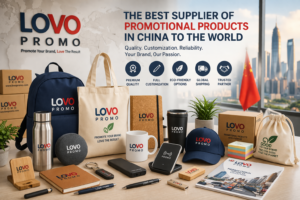



The promotional products industry has undergone a remarkable transformation over the past decade. What was once a straightforward business of slapping corporate logos onto pens, mugs, and tote bags has evolved into a sophisticated ecosystem of brand storytelling and experiential marketing. At the center of this evolution stand Chinese promotional products manufacturers, who have aggressively moved up the value chain from commodity producers to innovation partners. For businesses seeking to make lasting impressions in an increasingly crowded marketplace, understanding these advanced customization capabilities has become essential.
The End of the “Logo Slap” Era
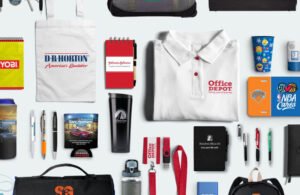
For decades, the standard operating procedure in promotional products remained frustratingly static. A company would select an item from a catalog, provide artwork in vector format, and receive hundreds or thousands of identical units bearing their logo in one or two standard positions. This approach, while functional, treated promotional items as afterthoughts rather than strategic marketing tools.
Consumer expectations have fundamentally shifted. Recipients now demand products that feel personal, useful, and aligned with their values. A generic pen with a screen-printed logo no longer cuts through the noise—it becomes clutter. Recognizing this shift, progressive Chinese factories have invested heavily in technology, design capabilities, and flexible manufacturing systems that enable entirely new categories of customization.
These investments were not accidental. As labor costs in China rose and competition from other manufacturing hubs intensified, factories faced a critical choice: compete on price in a race to the bottom, or differentiate through capabilities that command premium positioning. The smartest suppliers chose the latter path, and buyers are now reaping the benefits.
Digital Printing Revolution: Photographic Quality on Any Surface
Perhaps no innovation has transformed promotional product customization more dramatically than advances in digital printing technology. Chinese factories have embraced industrial-grade UV printers, dye-sublimation systems, and direct-to-garment technologies that enable photographic-quality imagery across virtually any material.
UV printing, in particular, has opened new possibilities. This technology uses ultraviolet light to instantly cure specially formulated inks, allowing for full-color, high-resolution printing on hard surfaces previously resistant to decoration. Wood, metal, glass, leather, and even irregular three-dimensional objects can now receive detailed imagery that wraps around edges and covers entire surfaces. A bamboo wireless charging pad might feature a landscape photograph that flows seamlessly across its curved surfaces. A stainless steel water bottle could display intricate patterns that appear to be etched but are actually printed with durability exceeding traditional methods.
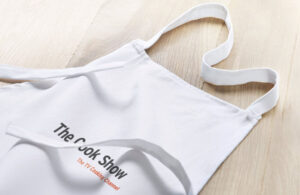
Dye-sublimation has similarly revolutionized textile decoration. Unlike screen printing, which sits on top of fabric, dye-sublimation infuses ink directly into polyester fibers, creating permanent, breathable designs that won’t crack, peel, or fade. Chinese factories now offer all-over printing on apparel, allowing designs to continue across seams, under arms, and onto collars. The result is clothing that functions as wearable art rather than walking billboards.
These digital technologies enable variable data printing—each unit in a production run can feature different imagery, names, or messages without slowing production or incurring setup costs. Imagine a conference where every attendee receives a notebook featuring their own photograph, or a corporate gift program where products display localized imagery specific to each recipient’s region.
Laser Precision: Etching, Cutting, and Personalization at Scale
Laser technology has become another cornerstone of advanced customization capabilities in Chinese manufacturing facilities. Modern fiber and CO2 laser systems offer precision that was previously impossible at production scale, enabling techniques that elevate perceived value dramatically.
Laser engraving creates permanent, tactile marks by vaporizing material surfaces. On metal products, this produces a sophisticated, premium appearance that suggests jewelry-quality craftsmanship. Wood items receive burned, organic textures that feel artisanal rather than mass-produced. Leather goods display precise debossing that improves with age as natural patina develops around the etched areas.
Beyond surface decoration, laser cutting enables intricate product customization. Factories can now create complex cutout patterns in materials ranging from acrylic to stainless steel, producing promotional items that function as design objects. A metal bookmark might feature a company’s skyline rendered in delicate laser-cut silhouette. An acrylic award could incorporate intricate geometric patterns that play with light and shadow.
Perhaps most impressively, laser systems enable true mass personalization. Each item in a production run can receive unique laser-etched names, serial numbers, or custom messages without changing physical tooling. This capability transforms promotional products into personalized gifts that recipients treasure rather than discard.
Smart Integration: Technology-Embedded Promotional Products
The most forward-thinking Chinese suppliers have moved beyond passive decoration into active functionality, integrating technology directly into promotional products. This convergence of physical merchandise and digital capability creates unprecedented engagement opportunities.
Near Field Communication (NFC) chips, embedded during manufacturing, transform everyday objects into interactive touchpoints. A promotional notebook might include an NFC-enabled cover that, when tapped with a smartphone, launches a personalized video message or connects to a digital business card. Conference badges with embedded NFC enable seamless contact exchange and session tracking. Retail packaging with hidden NFC chips bridges physical and digital shopping experiences.
USB and wireless charging technology has been thoroughly commoditized by Chinese manufacturers, who now integrate power solutions into unexpected form factors. Desktop organizers charge multiple devices simultaneously. Picture frames illuminate and charge phones placed within them. Backpacks feature built-in battery packs and cable management systems. These aren’t afterthought additions but engineered solutions developed through sophisticated electronics integration.
Augmented reality (AR) integration represents the cutting edge. Products are designed with specific markers or shapes that trigger AR experiences when viewed through smartphone cameras. A promotional toy might come alive with animation. A printed catalog could display 3D product models. Chinese factories now collaborate with software developers to ensure physical products are optimized for these digital interactions.
Material Innovation: Sustainable and Unexpected Substances
Material science has become a competitive battlefield among Chinese promotional product manufacturers. As global brands prioritize sustainability, factories have developed expertise in alternative materials that tell compelling environmental stories without compromising durability or aesthetics.
Recycled ocean plastic has transitioned from novelty to mainstream capability. Advanced processing techniques transform recovered fishing nets and ocean-bound plastic waste into premium-feeling products indistinguishable from virgin materials. Suppliers now provide detailed chain-of-custody documentation, allowing brands to make specific environmental claims about their promotional items.
Agricultural waste materials represent another frontier. Wheat straw, rice husks, coffee grounds, and cork are being incorporated into plastic composites and standalone products. These materials offer distinctive textures and colors while reducing reliance on petroleum-based inputs. A phone case might contain visible coffee ground flecks that tell a story of waste transformation.
Mycelium—the root structure of mushrooms—has emerged as a revolutionary packaging and product material. Grown rather than manufactured, mycelium can be molded into custom shapes that provide protective packaging or stand alone as promotional items. At end of life, these products compost completely, leaving no trace.
Concrete, surprisingly, has found new life in promotional products through advanced formulation techniques. Ultra-lightweight, fiber-reinforced concrete enables sophisticated desk accessories, coasters, and tech stands with industrial aesthetics and substantial perceived value. Chinese factories have perfected coloring, polishing, and sealing techniques that make concrete feel luxurious rather than utilitarian.
Structural Customization: Products Built to Specification
The ultimate expression of customization capability lies in structural modification—altering the physical form of products rather than merely decorating standard items. Chinese manufacturers have increasingly embraced this approach, offering original design manufacturing (ODM) services that were once the exclusive domain of premium European or American suppliers.
Parametric design capabilities allow factories to efficiently produce products in custom shapes and sizes without traditional tooling costs. 3D modeling software integrates directly with manufacturing equipment, enabling small-batch production of unique forms. A company might commission a phone stand shaped like their product, produced in quantities as small as 500 units with competitive per-unit pricing.
Modular product architectures enable configuration at the individual order level. Tech accessory kits might include customizable combinations of cables, adapters, and storage cases selected by each client. Apparel systems allow mixing of components—different sleeve lengths, pocket configurations, or hood styles—within single production runs.
Packaging integration has become particularly sophisticated. Chinese factories now design promotional products specifically to function as their own packaging, reducing waste while creating memorable unboxing experiences. A gift set might arrive as an origami-inspired structure that transforms into a desk organizer, with no separate box to discard.
Collaborative Design Services: From Concept to Completion
Perhaps the most significant evolution in Chinese supplier capabilities involves the upstream expansion into design services. Leading factories no longer simply execute buyer-provided specifications; they employ industrial designers, material specialists, and trend forecasters who collaborate with clients from concept development through production engineering.
This partnership model addresses a critical pain point in promotional product procurement: the gap between marketing vision and manufacturing reality. Brand managers often lack technical knowledge about material constraints, production limitations, or cost drivers. Chinese design teams bridge this gap, translating creative concepts into manufacturable products while suggesting innovations clients might never have considered.
Virtual prototyping accelerates this process dramatically. Photorealistic renderings and 3D animations allow clients to evaluate designs before any physical samples exist. Some suppliers now offer augmented reality visualization, enabling clients to view virtual products in their actual intended environments through smartphone cameras.
Rapid sampling capabilities—often leveraging 3D printing and CNC machining—allow physical evaluation within days rather than weeks. This speed enables iterative design refinement that was previously impractical for promotional product timelines.
Quality Assurance for Complex Customization
Advanced customization introduces quality control challenges that simple logo applications never presented. Chinese factories have responded with sophisticated inspection protocols tailored to complex decoration and construction.
Color management systems ensure consistency across different materials and production batches. Spectrophotometers verify color accuracy against Pantone specifications or brand guidelines. Digital printing systems include inline quality cameras that detect and reject defects automatically.
Functional testing has become standard for technology-integrated products. Each NFC chip is verified for proper programming and read range. Charging products undergo electrical safety testing exceeding regulatory requirements. Waterproof items receive pressure testing to validate sealing integrity.
These quality investments protect brand reputation. A failed promotional product damages perception more severely than no product at all, and sophisticated buyers now demand documentation of testing protocols as a condition of partnership.
Strategic Implications for Buyers
For procurement professionals and marketing leaders, these expanded capabilities require evolved sourcing strategies. The lowest unit price no longer correlates with best value when differentiation and engagement are primary objectives.
Successful partnerships with advanced Chinese suppliers demand earlier involvement in campaign planning. Complex customization requires longer development timelines but delivers disproportionately greater impact. The traditional pattern of last-minute promotional product orders increasingly limits organizations to commodity options while competitors deploy sophisticated branded experiences.
Budget allocation strategies must similarly evolve. Investment in design development and premium customization typically yields higher per-unit costs but dramatically improved recipient retention and brand recall. The promotional products industry has matured to a point where measurement of these outcomes—through redemption tracking, post-campaign surveys, and digital engagement metrics—enables rational evaluation of return on investment.
Conclusion About China Promotional Products Suppliers
The promotional products industry stands at an inflection point. The distinction between commodity suppliers and strategic partners has never been clearer, and Chinese manufacturers have positioned themselves decisively in the latter category through sustained investment in technology, design capability, and flexible manufacturing systems.
For brands willing to move beyond logo slaps, the opportunities are extraordinary. Products can now tell stories, create experiences, and build relationships in ways that were technically impossible or economically unfeasible just years ago. The factories exist, the capabilities are proven, and the only limitation is imagination.
The question for marketers is no longer whether Chinese suppliers can execute complex customization, but whether their organizations are prepared to leverage these capabilities strategically. Those who answer affirmatively will find promotional products transformed from budget line items into powerful brand building tools. Those who don’t risk distributing the forgettable clutter that increasingly ends up in landfill along with the marketing budgets that produced it.
Ready to explore advanced customization for your next campaign? Contact our team to discuss how these innovative techniques can elevate your promotional product strategy.